
One of the biggest changes to Canada’s new Food Guide in 2019 is that it no longer includes dairy as its own food group (it’s now included under Protein Foods). When it was released, this change was one of the biggest points of discussion among dietitians. Limited or lack of dairy products are often a concern for plant-based diets, because alternative sources of calcium and vitamin D are needed. Plenty of cultures around the world don’t eat dairy, but it’s worth thinking through calcium, vitamin D, and dairy in the context of climate change.
Dairy’s Impact on Climate
You might have heard that dairy is the second biggest contributor to food-related greenhouse gas emissions after meat, and that’s true, but that claim hides a range of impacts for different types of dairy that are interesting and under-explored. The chart below shows the greenhouse gas emissions associated with various staple foods, including the different emissions from milk produced around the world. These charts are pulled from an open access systematic literature review (Clune, Crossin, & Verghese, 2017).
You might think that dairy products have a lower emissions profile than all meat, but actually, cheese and butter emit more than chicken or pork:
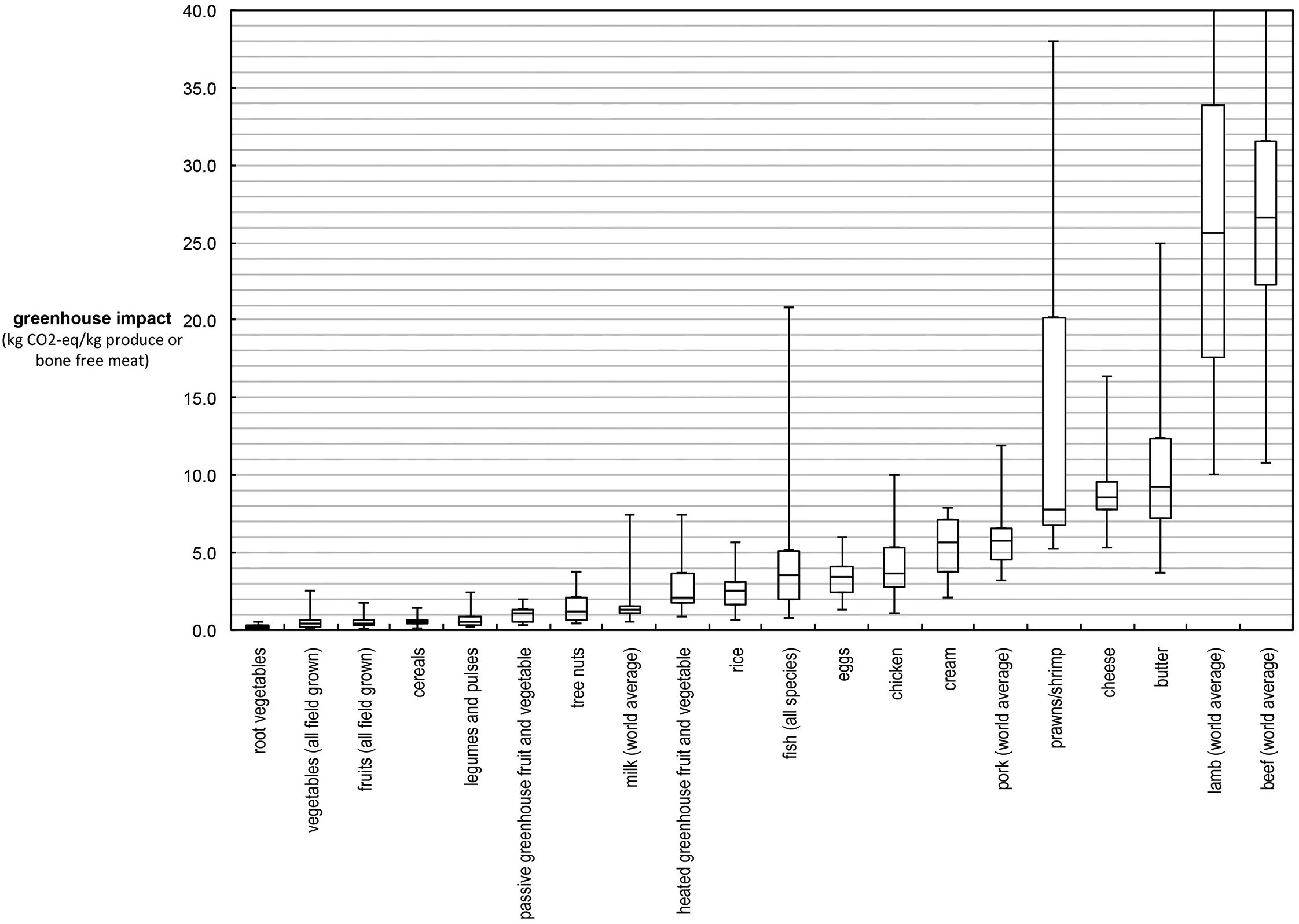
This is because it takes so much milk to produce a solid block of butter or cheese.
If we zoom in on dairy, you can see that cheese and butter have the highest dairy emissions, and that plant milks like soy have the lowest emissions, with cream in the middle. Yogurt has basically the same emissions as milk. Interestingly, buffalo milk is more emissions-intensive than cow’s milk, because buffalos are even larger ruminant animals than cows (this same systematic review finds that buffalo meat has an even greater climate impact than beef, by a surprisingly high amount).
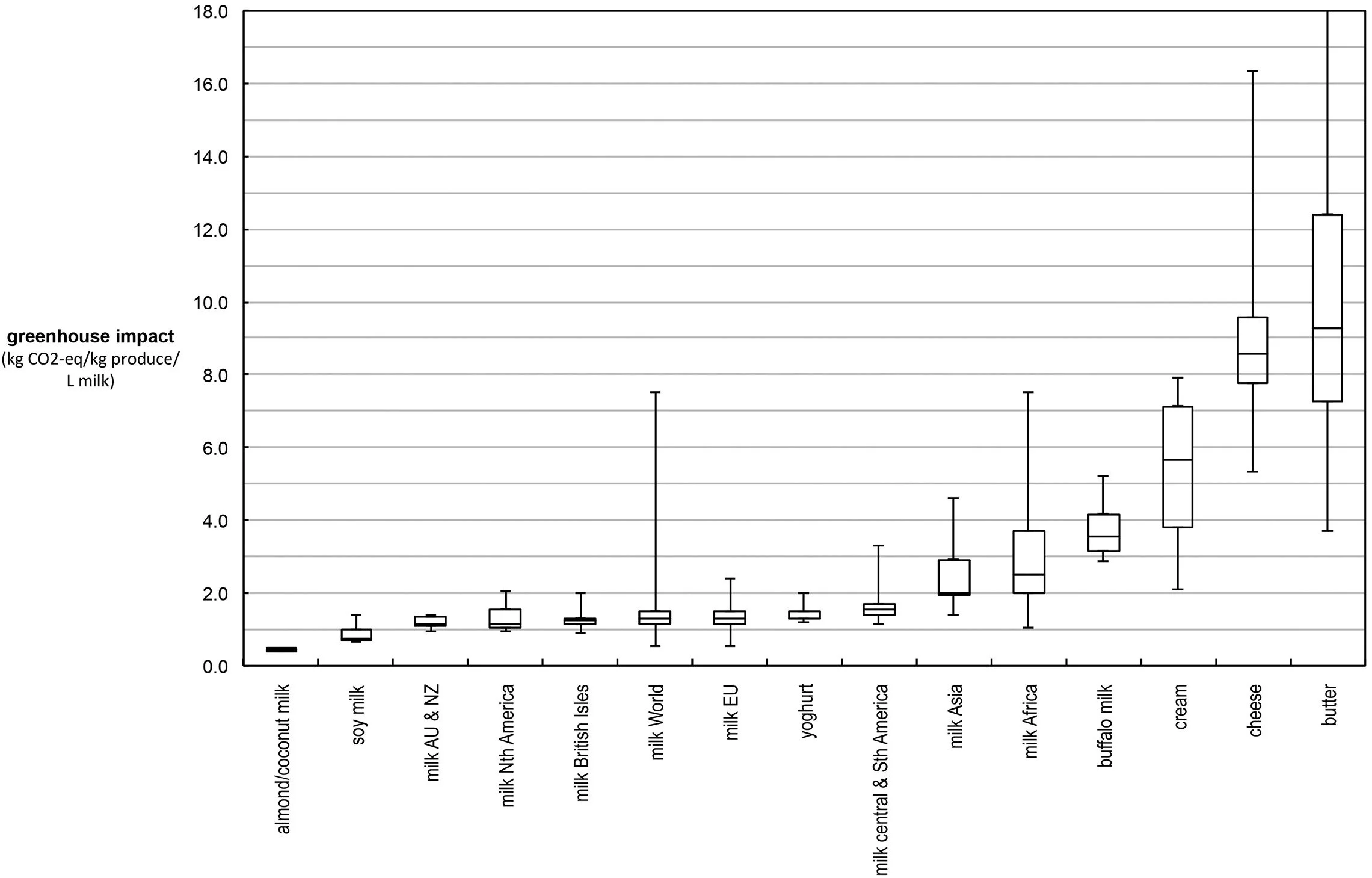
Plant milks have made huge gains in the last few years in popularity and market share, and there probably is a small reduction in climate impact when people make the switch. If we’re looking at which foods have the highest emissions, though, cheese and butter need our attention. The emissions from butter are high, but we don’t eat that much of it in a diet–it’s basically a condiment. The climate impact of margarine wasn’t included in this review, but luckily other life cycle assessments have been done, like this one, and they find that margarine has less than half the environmental impacts of butter (less greenhouse gas emissions, much less land needed, and less acidification). Clearly, there’s an opportunity there to reduce food emissions (and other environmental impacts) by switching from butter to non-dairy margarine, especially at big food service operations or in corporations producing a popular food product. That said, to me cheese is the elephant in the room.
In a previous post, we pointed out that beef intake has decreased substantially over the last 50-100 years in Canada (as it has in the U.S), and most people have replaced beef with chicken, which is better for the climate. For dairy, though, the general trend is that milk intake is decreasing and cheese intake is increasing:
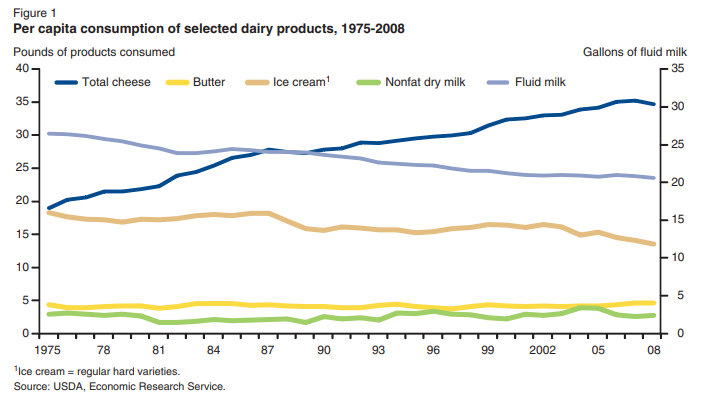
This chart uses data from the U.S., but the trends in Canada are similar. In a recent McGill study published in Nature Food, researchers modeled the climate and health impacts of substituting plant proteins for red and processed meats (win-win). When they modeled dairy replacements, though, there was a smaller reduction in climate impact and more of a health trade-off (more calcium deficiency).
For climate impact, reducing meat from ruminant animals, like beef, veal, and lamb, remains the most impactful change you can make. But if you’re concerned about the climate impact of dairy, choose a vegan margarine over butter, and consider cheese alternatives, or think of cheese as a luxury. We also need better, nutrient-rich alternatives to cheese: currently, non-dairy cheeses tend to have little to no protein and are almost never fortified with calcium.
Dairy and Nutrition
The current calcium recommendation for Canadian adults aged 19-50 is 1000 mg/day, while the recommendation for vitamin D is 15 mcg/day. How easy is it to meet these targets without consuming dairy (or consuming only limited amounts of dairy)?
It can definitely be done. Many plant-based milks are now fortified with these nutrients in amounts similar to cow’s milk. Other plant-based sources of calcium include calcium-set tofu, fortified orange juice, and cooked leafy greens. Canned salmon is also a rich source for those who eat fish. Meanwhile, you can get vitamin D from the sun, from a supplement, or from mushrooms that have been exposed to sunlight or another source of UV light.
However, dairy products tend to be the richest sources of calcium, and the easiest option for many people. Soy and pea milks are currently the best alternatives to cow’s milk in terms of protein, and most plant-based milks are too low in protein to be relied on as a protein source.
Occasionally, you might also hear people question whether the current calcium recommendations are too high. You might also have heard that the WHO only recommends a minimum of 500mg per day for adults. However, this recommendation is out of date. As of 2016, the WHO recommendations align with those for the US and Canada mentioned above, as well as numerous other countries including Australia, New Zealand, and Germany. But that doesn’t mean there is unanimous agreement: the UK only recommends a minimum of 700mg, and Japan recommends 650 for women and 750 for men.
Bottom line: you don’t need to consume dairy in order to get enough calcium and vitamin D, but it can be the easiest way for many people. If dairy is consumed, one effective way to lower your climate impact is to choose lower-emissions sources: have milk or yogurt instead of cheese. And, we need much more investment in cheese alternatives: it’s a big source of greenhouse gas emissions and we’re eating more and more of it.
—Anneke and Sylvia